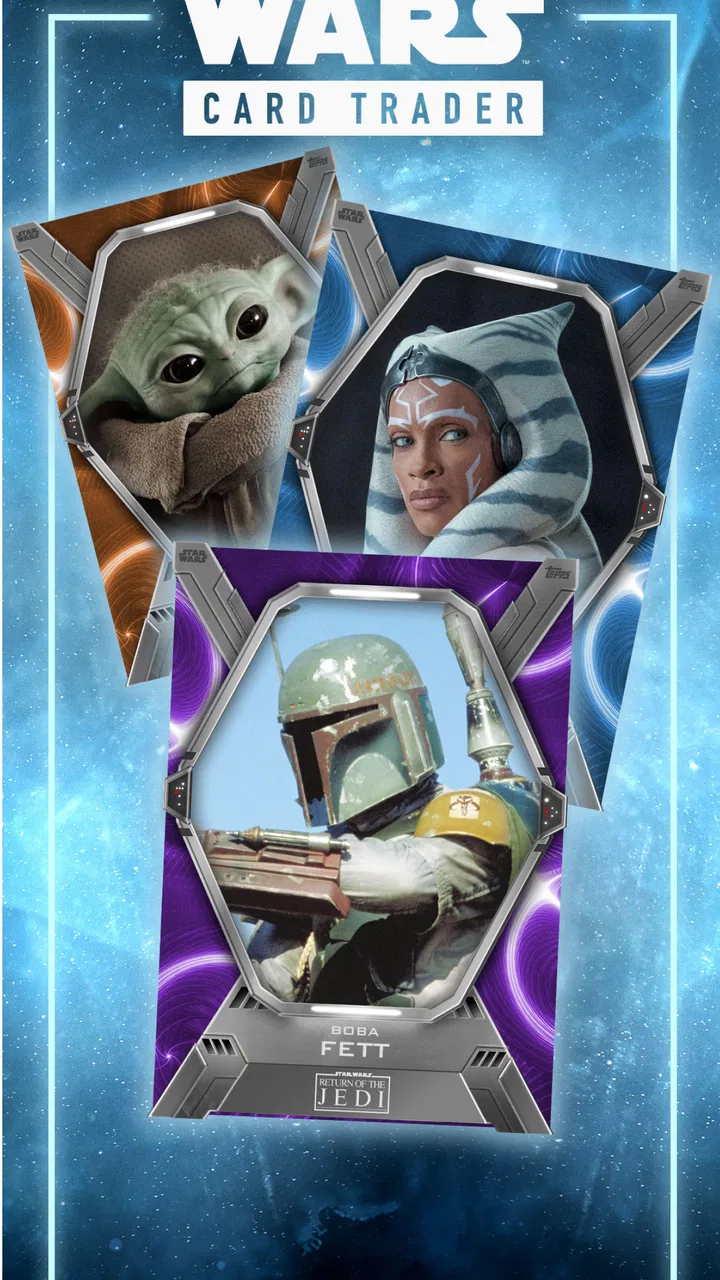
Star Wars™ Card Trader
- 3.6
- Rating
- 1.00M
- Installs
- Free
- Price

 Analysis by App-foxy
I found Star Wars Card Trader most interesting when I treated it as a shared hobby rather than a conventional card game. The app turns Star Wars collecting into a digital activity built around discovering cards, organizing them, and trading with other fans. That makes it a natural fit for a household where one person follows characters and films closely while another enjoys the satisfaction of completing sets or finding unusual artwork.
My first impression was that this is not trying to replace a tabletop battle game. It is a card-collecting experience from The Topps Company, Inc., with the appeal coming from the collection itself and the conversations around it. You can open the app for a quick look, compare cards with someone nearby, or spend longer deciding which pieces are worth keeping and which might help you obtain something more useful.
The game is free to install and suitable for Everyone, which lowers the barrier for trying it together. Still, “free” needs a little context here: optional purchases range from $0.99 to $99.99 per item. I would therefore introduce it as a collecting app with spending attached, not as a completely cost-free pastime. That distinction matters especially when several people use the same household device.
You May Also Like

 Blood Strike: 2.5 Anniversary
Blood Strike’s Loadouts Turn Every Drop Into a Tactical Gamble
A close look at Blood Strike’s custom loadouts: how fast access to signature weapons reshapes its battle royale rhythm, rewards preparation, and narrows the gap between fights.

 Pandora - Music & Podcasts
Pandora’s Music Is Easy to Start, but Harder to Recover
Pandora’s strength is its low-effort path from a seed to a station. Its weak spot is how much confidence it asks you to place in connection, setup, and quiet recovery.

 8 Ball Pool
 Is Built on Rivalries, Rematches, and Routine
A close look at the rivalries, rematches, shared routines, and unanswered safety questions that turn a quick pool match into a persistent mobile community.

 Samsung Music
’s Quiet Strength Is Playing What You Already Own
Its reach comes less from spectacle than from dependable access to a personal library. That simplicity is both the app’s strongest retention engine and its ceiling.

 AccuWeather: Weather Radar
AccuWeather Review: A Quick, Clear Forecast for Everyday Decisions
For everyday plans, the best forecast is the one you can understand quickly. AccuWeather makes rain timing, radar, and local conditions easy to act on, with a few trade-offs.

 Hill Climb Racing
Why Hill Climb Racing Still Turns Crashes Into One More Run
A tiny car, a bumpy hill and one more upgrade: Hill Climb Racing keeps resurfacing because its simple chaos makes every near-miss feel personal.
More From Our News Desk



How it works when more than one person in the home is interested
A realistic use case is a parent and child sharing a tablet after dinner. One person might browse for favorite characters, while the other focuses on sorting the collection or looking for trades. The app gives them a common subject without requiring the same level of Star Wars knowledge. Someone can enjoy the visual side of the cards, while a more dedicated fan can care about how a collection is developing.
I like this kind of shared use because it creates small decisions rather than demanding a long uninterrupted session. You can look through the collection for a few minutes, discuss a card, and put the device away. That makes it easier to fit into an ordinary evening than a game that expects everyone to complete a match before stopping.
There is also a useful social layer in the idea of trading. A card is not only something to view; it can become part of a conversation about what another collector wants and what you are willing to exchange. In practice, this means the app works best when users agree on boundaries before trading. A younger player may value a card for its character, while an older collector may value it because it fills a particular part of a set. Those priorities should be discussed instead of assumed.
The strongest household use is cooperative collecting, not competition. If everyone is trying to control the same collection, disagreements can appear quickly. I would decide in advance whether the cards belong to one shared account, whether each person has a personal collection, and who has the final say before accepting a trade or spending money. Those are simple rules, but they prevent a surprising amount of friction.
What the first setup should establish
Before handing the device to a child, I would make the account boundary clear. A shared tablet can make it easy to assume that anything visible belongs to everyone. That is not a safe assumption for a collecting game. If several people want to participate, label the arrangement in plain language: this is one shared collection, or this is one person’s account being viewed by others.
I would also explain the difference between looking at a card, trading a card, and buying something. These actions do not carry the same consequence. Browsing is harmless, trading changes the collection, and an in-app purchase can involve real money. The Everyone age rating is reassuring for general suitability, but it does not remove the need for an adult conversation about purchases and online interaction.
On a personal device, I would keep the account tied to the person who actually manages it rather than letting several people casually sign in and out. On a shared device, I would avoid leaving the app open at a point where another user could accidentally continue an action. I am not presenting that as a special feature of the game; it is simply a sensible routine for any app involving digital items and optional spending.
The current version is 21.2.2, and the game requires Android 7.0 or later. That makes checking the device version worthwhile before planning a family setup. A child may be interested, but an older household phone or tablet could still be the practical limitation. I would also make sure the device has enough battery and a stable connection before beginning a longer collecting session, since interruptions are particularly annoying when you are in the middle of organizing or reviewing cards.
Coordinating trades without turning the collection into an argument
Trading is where household coordination matters most. My advice is to create a simple “ask first” rule for any card that another person has selected as a favorite. A card may look ordinary to one user and be the centerpiece of another user’s collection. Asking before offering it away respects the personal meaning that often makes collecting enjoyable.
A second useful habit is to separate duplicates or less important cards from protected favorites. Even if the app does not replace a physical binder with colored dividers, the household can still use a shared verbal system: favorites stay put, possible trades are discussed, and uncertain cards are left alone until everyone agrees. This reduces accidental decisions made in a hurry.
I would also avoid treating every trade as a test of value. Digital collecting can encourage people to focus on rarity or perceived desirability, but a fair household trade may simply be one that makes both people happier. A child who wants a character card may not care about the same things as an adult who is building a more systematic collection. The best exchange is the one both sides understand, not necessarily the one that appears cleverest.
For a family with separate interests, coordination can be even easier if each person chooses a theme. One user might concentrate on a favorite era or group of characters, while another collects cards based on artwork or personal memories. This gives the collection structure without pretending that everyone wants the same goal. It also makes it easier to decide what can be traded and what should remain personal.
One limitation became clear to me: the app’s appeal depends heavily on the user enjoying collecting for its own sake. Someone looking for a traditional card battler, a campaign, or a deep strategic match may find the experience less satisfying than a game designed around turns and competition. In that situation, a conventional digital card game is likely a better choice. Here, the collection and the fan community are the center of attention.
Age, trust, and the social side of the app
The Everyone rating makes the game approachable for a broad audience, but age suitability and household readiness are not exactly the same thing. A younger child may understand how to admire cards without yet understanding why a trade should be checked first or why an optional purchase needs permission. I would judge readiness by those habits rather than by the rating alone.
Trust is especially important because trading involves other collectors, not just the person sitting beside you. I would teach a child not to share personal information while interacting with strangers and to ask an adult whenever a conversation feels confusing or uncomfortable. That advice is not a criticism of this particular game; it is the right foundation for any app with a social or trading element.
I would also keep expectations realistic about the app’s rating. An average of 3.7 from around 24 thousand ratings suggests a mixed but substantial user response. I read that as a reason to try it with modest expectations rather than assuming it will suit every Star Wars fan. Some people will love the collection loop, while others may dislike the pace, the emphasis on digital ownership, or the possibility of spending.
The game has passed one million installs, so it is not an obscure experiment with no audience. That matters because collecting feels more worthwhile when there are other fans to engage with. At the same time, popularity does not guarantee that every interaction will be equally useful or that every trade will match your preferences. I would encourage younger users to keep their activity focused on the cards and to involve an adult when something seems unclear.
For a household with two adults, the boundaries can be lighter but still worth discussing. One person may be happy to spend occasionally, while the other prefers a completely free approach. Agreeing on that difference prevents the common problem where one user assumes that a purchase is part of normal play and another sees it as unnecessary.
Where the optional spending changes the experience
The free entry point is a genuine strength. You can see whether the collecting format works for you without paying at the door. However, the purchase range is wide enough that I would not let a child explore it without clear permission rules. A low-cost item can feel trivial in isolation, but repeated decisions or a larger single purchase can change the household budget.
My practical approach would be to treat every purchase as an adult decision, even if the item seems inexpensive. If the app is used by several people, I would say exactly who may request something, who approves it, and whether the answer can change from one session to the next. This is more reliable than assuming that a child will recognize the difference between an in-game choice and a real charge.
There is also a collecting trade-off here. Spending may make the experience feel more active, but it can weaken the satisfaction of slowly building a collection if users begin to measure progress by what they can buy. I prefer setting a free-first goal: explore, organize, and trade before considering a purchase. That approach keeps the app enjoyable for households that want a hobby rather than another recurring expense.
Compared with physical Star Wars cards, the digital format is more convenient and easier to browse on a phone or tablet. You do not need storage space for packs or binders, and several people can look through the same screen. The compromise is that the collection does not have the same physical presence, and a shared device can blur ownership unless the household establishes clear rules.
Compared with a standard card game, the experience is less about winning a match and more about building something personal. That makes it better for relaxed fan conversations, but worse for users who want a clear scoreboard, tactical turns, or a self-contained challenge. I would choose this app for the collector in the family, not for someone asking for the deepest strategy game in the card category.
Small habits that make collecting more satisfying
My first tip is to decide on a collection purpose before chasing every appealing card. A theme gives each new item a reason to matter. Without one, the app can become a stream of attractive images with no sense of direction, especially when several family members are browsing together.
My second tip is to pause before trading a card that is merely available. Availability is not the same as replaceability. If a card connects to a favorite character or film, I would mark it mentally as protected and only trade it after a deliberate conversation. This is particularly important when a child and adult share the same collection but value different parts of it.
My third tip is to use short review sessions. Instead of opening the game repeatedly without a plan, I would choose one task: inspect recent cards, sort possible trades, or discuss a family member’s favorites. This keeps the experience from becoming aimless and makes it easier to stop before spending or trading impulsively.
A fourth insight is that the app can work as a low-pressure way to introduce collecting vocabulary. Younger users can learn the difference between keeping, exchanging, completing a theme, and waiting for a better opportunity. I would frame those as choices rather than lessons. The goal is not to turn a leisure app into homework, but to help children understand that digital items still deserve careful decisions.
Finally, I would not judge the collection only by how large it becomes. A smaller group of cards with a clear personal theme can be more enjoyable than a crowded account that nobody knows how to manage. This is where the app differs from a simple endless-unlock experience: its value comes from the meaning users give to the collection and the conversations it creates.
Who should try it, and who should skip it
I would recommend it to Star Wars fans who enjoy browsing, organizing, and trading digital collectibles. It is also a good candidate for a shared household activity when the participants can agree on account ownership, spending, and trade approval. The free starting point makes experimentation easy, and the Everyone rating means it can be considered for a broad age range with sensible adult guidance.
I would be more cautious for someone who dislikes optional purchases on principle, even when they are not required to begin. The purchase range is part of the experience’s context, and a person who wants a strictly fixed-cost game may feel more comfortable with a paid title or a card game without a collection marketplace feel.
I would also skip it if the main goal is competitive strategy. A traditional card battler, tabletop adaptation, or deck-building game will probably provide more satisfying decisions during play. This app is strongest when the question is “Which card do I want to keep or find?” rather than “What move wins this round?”
For a child using a family tablet, I would recommend it only when an adult is willing to explain the boundaries and occasionally check how the collection is being managed. The age rating is a helpful starting point, but shared devices and digital trades still require trust and coordination. If the household cannot agree on those basics, the app may create more disputes than enjoyment.
My household verdict
After looking at it as both a fan-oriented card game and a shared-device activity, I see a focused experience with a clear audience. Star Wars Card Trader is not a universal replacement for every card game, but it gives collectors a convenient way to enjoy digital cards, talk about favorites, and build a personal theme over time.
The involvement of The Topps Company, Inc. fits the collecting format, and the long-running presence implied by its release in April 2015 gives the app a more established feel than a brand-new experiment. Its current version, 21.2.2, and Android 7.0 requirement are practical details to check before installing on an older device.
My recommendation is strongest for households that treat the app as a shared hobby with clear ownership rules. Decide whose collection is whose, ask before trading, and keep purchases behind an adult decision. Those steps do not take away from the fun; they protect the part that makes collecting personal.
I would start free, choose a theme, and spend a few sessions learning whether the collection loop actually holds everyone’s attention. If the family enjoys discussing cards and making careful trades, this can become a pleasant Star Wars ritual. If users want battles, strict strategy, or no purchase pressure at all, another card game will be a better match.
Overall, I think it is worth trying for the right fan. The app’s best quality is not simply that it displays Star Wars cards; it gives people a reason to compare tastes and make decisions together. Its biggest weakness is that digital ownership, social interaction, and optional spending need more household discipline than the simple store summary might suggest.
FAQs for Star Wars™ Card Trader
01What is Star Wars Card Trader by Topps?
Star Wars Card Trader by Topps is a digital card collecting app where fans can collect and trade cards featuring characters, scenes, and vehicles from the Star Wars universe. The app offers various sets and cards that are frequently updated, allowing users to engage with the Star Wars franchise in a unique way.
02How do I get started with collecting cards in the app?
After downloading and installing Star Wars Card Trader, you'll need to create an account. Once you're set up, you can start collecting cards by purchasing packs using in-game currency or credits. New users often receive a starter pack to help them begin their collection journey.
03Are there any costs associated with using Star Wars Card Trader?
While Star Wars Card Trader is free to download and use, it does offer in-app purchases. Users have the option to buy additional credits or premium packs, which can enhance the collecting experience. However, it's possible to enjoy the app without spending money by earning credits through daily logins and other in-app activities.
04Can I trade cards with other users?
Yes, trading is a central feature of Star Wars Card Trader. Users can interact with others around the globe to trade cards. This feature encourages community engagement and adds a strategic layer to collecting, as users negotiate trades to complete their collections.
05Is the app regularly updated with new content?
Star Wars Card Trader by Topps is frequently updated with new card sets, events, and challenges. These updates often coincide with new Star Wars releases or anniversaries, ensuring that the content remains fresh and exciting for both new and seasoned collectors.
Pros
- Extensive card collection available.
- Engaging daily challenges.
- User-friendly interface design.
- Frequent updates with new content.
- Active trading community.
Cons
- Requires stable internet connection.
- In-app purchases can be costly.
- Occasional app crashes reported.
- Limited offline functionality.
- Some content locked behind paywall.

Star Wars™ Card Trader
Gallery